
Effective meeting notes have become more important than ever — not just for documenting what was said, but for creating actionable outcomes and shared alignment across teams.
With remote work, fast-moving startups, and globally distributed teams, manual note-taking isn’t cutting it anymore. That’s where AI note takers come in.
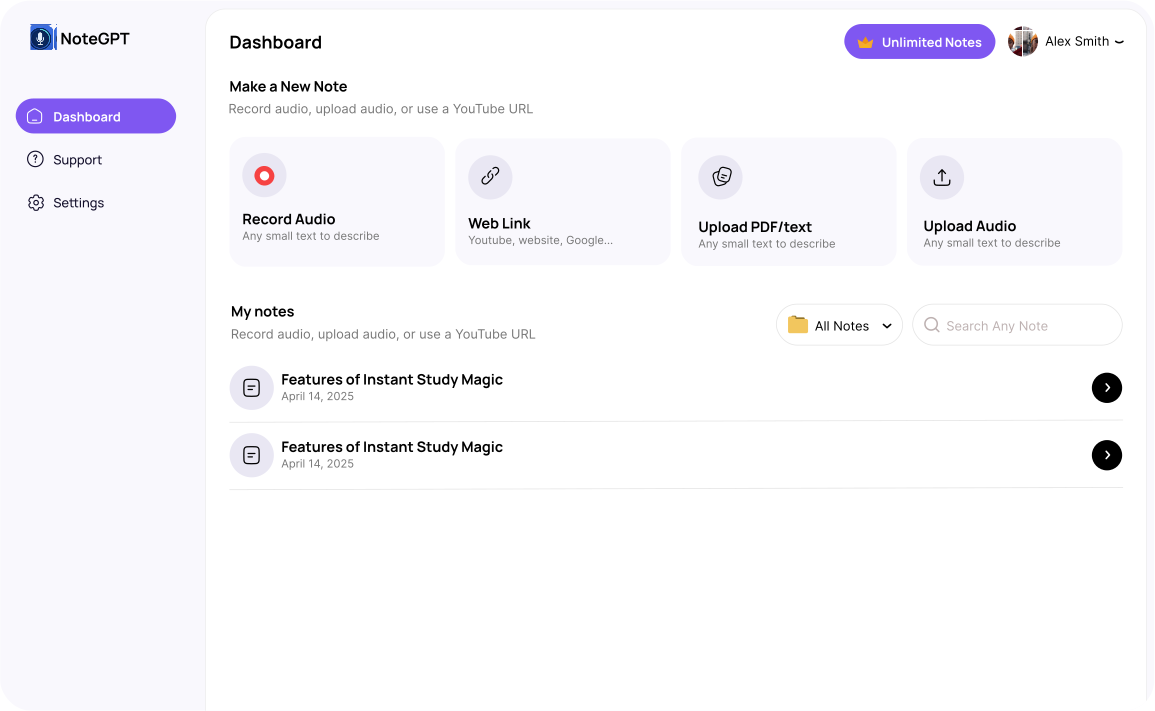
This guide is designed for those building or using AI meeting note tools like Notgept.com — and outlines everything from what makes notes useful, to what to avoid, and how to build trust through context-aware summarization and clean formatting.
Why Meeting Notes Matter More Than Ever
Meeting fatigue is real. The average knowledge worker spends up to 35% of their week in meetings. Without good notes, those hours are wasted. And yet, most people still rely on incomplete scribbles, delayed summaries, or forgettable transcripts.
Well-documented meeting notes do the following:
- Keep everyone aligned on decisions
- Reduce repetitive conversations
- Make ownership and follow-ups clear
- Allow absent stakeholders to catch up easily
- Save time on back-and-forth emails
In business, clarity compounds. Strong note-taking creates leverage across teams, projects, and decisions.
Consequences of Poor Note-Taking
| Problem | Impact |
|---|---|
| Incomplete or unclear notes | Confusion and miscommunication |
| Lack of action items | Missed deadlines and accountability gaps |
| No decision tracking | Rehashing the same conversations repeatedly |
| Manual effort | Wasted time that could be automated |
Poor notes don’t just waste time — they erode trust and productivity.
Manual vs AI-Powered Notes: What’s the Difference?
Manual notes can be great in small, one-on-one meetings or when someone is a fast typist with excellent context awareness. But as complexity scales, AI note takers like Notgept.com become essential.
Here’s a direct comparison:
| Feature | Manual Notes | AI Notes (e.g., Notgept.com) |
|---|---|---|
| Real-time transcription | ❌ | ✅ |
| Speaker recognition | ❌ | ✅ |
| Action item detection | ❌ | ✅ |
| Summarization | ❌ (manual only) | ✅ (automatic and structured) |
| Searchable archive | ❌ | ✅ |
| Integration with tools | ❌ | ✅ (Slack, Google Docs, etc.) |
AI note takers help scale clarity without increasing human workload.
Key Elements of Effective Meeting Notes
Whether created by a human or AI, the best meeting notes follow a clear structure. These components serve as anchors for meaning and action.
1. Meeting Metadata
- Title (what the meeting is about)
- Date & Time
- Attendees (with roles if possible)
- Duration
This data makes your notes searchable and gives context to the rest of the document.
2. Agenda Overview
List the main discussion points or topics covered, even if they weren’t all on the original agenda. Helps anyone skimming the notes understand what was covered.
Example:
- Product roadmap review
- Launch plan updates
- Budget approvals
- Engineering hiring needs
3. Key Discussion Points
Capture the essence of what was discussed. Don’t just transcribe — summarize meaningfully.
Tips:
- Use short paragraphs or bullets per topic
- Attribute ideas or decisions to individuals or teams
- Avoid vague statements like “discussed some ideas”
Bad:
“Talked about the next sprint and ideas for new features.”
Good:
“Alex proposed focusing the next sprint on refactoring the onboarding flow. The team agreed it would reduce support tickets and improve conversion.”
4. Decisions Made
Highlight what was actually decided during the meeting.
Format example:
- ✅ Launch date for v2 confirmed: January 15th
- ✅ $5,000 approved for customer research budget
- ✅ Engineering to hire 1 backend developer in Q1
5. Action Items
This is the most critical section. A note is only valuable if it leads to action.
Best practices:
- Assign an owner
- Add a deadline
- Be specific
Example Format:
| Task | Owner | Due Date |
|---|---|---|
| Draft Q1 hiring plan | Casey | Nov 17 |
| Finalize UX updates | Devon | Nov 21 |
| Approve research budget | Sarah | Nov 13 |
6. Open Questions or Unresolved Topics
Use this section to list any follow-ups, blockers, or items that need more discussion.
- “What’s the contingency if the supplier delay extends?”
- “Need clarity from finance on additional budget flexibility.”
What an AI Note Taker Must Get Right
For tools like Notgept.com, trust and usefulness go hand-in-hand. Here’s what separates average AI summaries from industry-leading note takers:
Context-Aware Summaries
The AI needs to know what matters. That means detecting when:
- A decision has been made
- Someone assigns a task
- A new blocker or issue is raised
Smart models are trained not just on syntax, but on meeting intent.
Accurate Speaker Attribution
Knowing who said what is critical. Speaker tagging builds accountability.
- It lets teams follow up quickly
- Helps avoid “he said, she said” loops
- Feeds into individual dashboards or CRM tools
Structured Output
The best AI notes aren’t just walls of text. They are:
- Divided into clear sections (Agenda, Discussion, Action Items)
- Exportable to tools like Notion, Docs, or Trello
- Easy to scan in 30 seconds or less
Privacy and Security
People trust AI tools with sensitive conversations. That means:
- End-to-end encryption
- Data ownership stays with the user
- Optional auto-deletion or redaction settings
- SOC2 / GDPR compliance
Without strong security, even the best notes won’t be used.
Best Practices for Taking Meeting Notes (Manual or AI-Assisted)
Here are timeless tips that apply whether you’re using Notgept or jotting by hand.
✅ Do:
- Use a consistent format every time
- Summarize, don’t transcribe
- Include names, dates, and outcomes
- Send/share notes right after the meeting
- Review the previous meeting’s action items at the start of the next one
❌ Don’t:
- Write paragraphs without structure
- Forget to assign owners to tasks
- Store notes in personal folders with no access for others
- Delay sharing notes (they lose relevance fast)
- Assume everyone remembers what was said
Templates That Work Every Time
Here’s a sample note template format you can customize:
Meeting Title: [Name]
Date: [MM/DD/YYYY]
Time: [HH:MM AM/PM]
Attendees: [Name, Name, Name]

Agenda:
- Item 1
- Item 2

Discussion Summary:
- Key Point 1
- Key Point 2

Decisions:
- ✅ Decision 1
- ✅ Decision 2

Action Items:

| Task | Owner | Due Date |
|------|-------|----------|
| ... | ... | ... |

Open Questions:
- What is [issue/question]?
- Who will handle [next step]?
Common Mistakes AI Note Takers Should Avoid
Even great tools fall into these traps if not carefully designed or trained:
1. Over-summarizing and Losing Nuance
Compressing too aggressively can erase important details or change the tone of a conversation.
2. Misattributing Speakers
If you say the CEO made a decision but it was actually the PM, that’s a big deal. AI needs to be over 95% accurate here.
3. Surfacing Too Much Noise
Transcripts with filler, off-topic chatter, and unrelated tangents add bloat. A good AI filters this out automatically.
4. Missing Action Items
This is where many AI tools fall flat. If there’s no task detection or the AI can’t flag when someone says “I’ll take care of that,” then the value of the notes drops significantly.
How Notgept.com Can Stand Out
Notgept isn’t just another AI note-taker — it can lead the category by doubling down on:
- Speed: Instant summaries post-meeting
- Clarity: Clear sections, minimal fluff
- Collaboration: Easy sharing, commenting, and syncing
- Trust: Crystal-clear speaker tracking and no hallucinations
- Flexibility: Templates for sales calls, 1:1s, team standups, board meetings
It should feel like having a silent chief of staff in every meeting — quietly capturing everything that matters, surfacing only the essentials.
Final Thoughts: The Future of Meeting Notes
As meetings get more complex and teams go fully remote, the winners will be those who turn conversations into decisions, and decisions into action — quickly and clearly.
AI isn’t here to replace humans in meetings. It’s here to help us be more present, more focused, and more aligned.
A tool like Notgept.com can own that promise by making meeting notes something people actually use — not just something they archive.