
Work meetings don’t always need to be serious or dull. In fact, kicking off a meeting with a fun fact can instantly shift the energy in the room.
Whether you’re leading a team of remote professionals or managing an in-office crew, sharing a quirky, weird, or fascinating fact can loosen up the conversation, spark engagement, and create a more relaxed vibe.
In this guide, we’ll show you how to use fun facts for work meetings to your advantage — and even how to make it part of your company culture.
By the end of this post, you’ll have over 25 fun facts to use, examples of how and when to share them, tips for staying appropriate in professional settings, and how to tie it all back to productivity using tools like NoteGPT to help meetings flow better.
Why You Should Use Fun Facts to Start Meetings
Fun Facts Spark Engagement (Even on Zoom)
Starting a meeting with a fun fact doesn’t just make people smile — it grabs attention, increases retention, and can even lower stress. In fact, research from Gallup found that employee engagement is 26% higher when team leads start meetings with short, non-work-related conversations.
This includes trivia, icebreakers, or short fun facts that allow the brain to ease into the work session.
Fun facts act like a reset button for the brain, especially during long days filled with back-to-back video calls. They’re particularly helpful when you’re managing remote teams, where social interaction is naturally limited and fatigue can set in quickly.
Icebreakers Build Team Culture Without Feeling Forced
One reason people roll their eyes at traditional icebreakers is that they often feel awkward or unrelated to the meeting. Fun facts, on the other hand, are low-stakes, non-invasive, and can be shared without putting anyone on the spot.
They allow team members to learn something interesting without being asked to share personal stories or feelings, which is particularly important in diverse, global teams where cultural sensitivities matter.
Unlike “two truths and a lie” or “what’s your biggest fear?” games, fun facts are neutral and can spark genuine interest — like a surprising science stat, a weird historical moment, or even a strange workplace-related trivia tidbit.
It’s Low Effort and Easy to Systemize
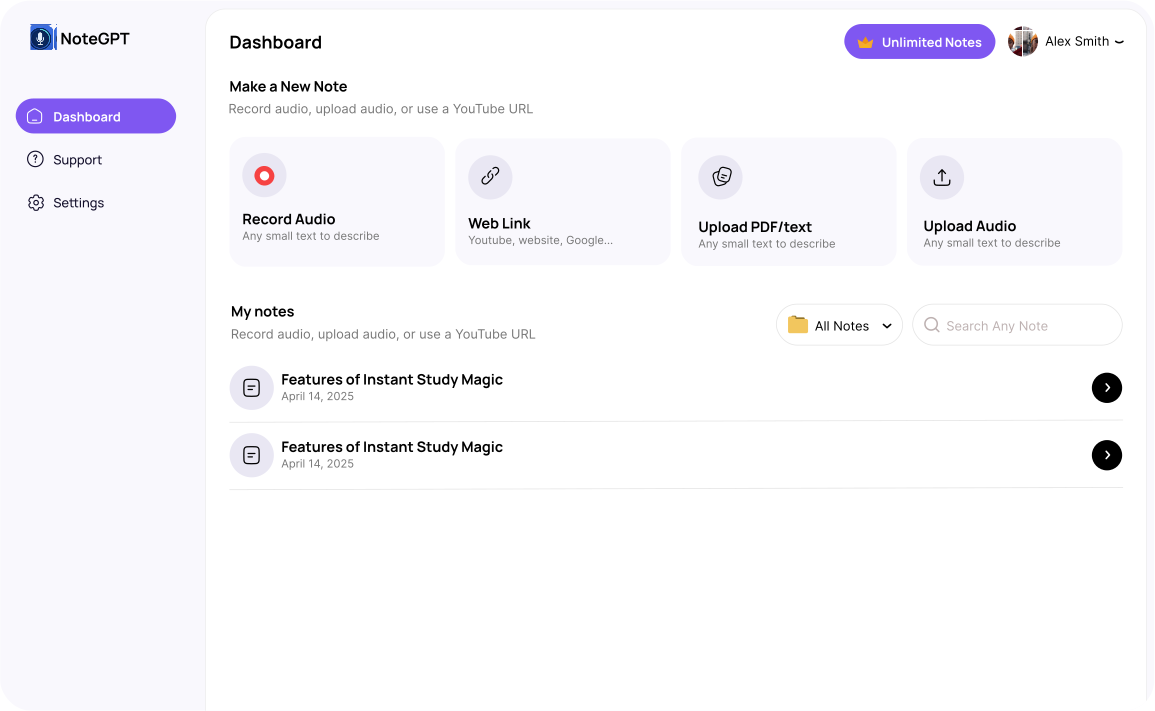
You don’t need to reinvent the wheel every week. If you’re a manager, team lead, or HR pro, you can systemize this into your workflow using NoteGPT or your daily team standup templates. Set a reminder to drop a fun fact in your Monday meetings, or rotate the responsibility so different team members get involved. You could even build a “fun fact of the day for work” Slack thread or email snippet.
Here’s a simple breakdown:
| Method | How To Use | Tools to Support |
|---|---|---|
| Meeting Kickoff | Share 1 fact at the start of your weekly team call | NoteGPT + Google Meet |
| Slack Channel | Daily post of one fun fact in team chat | Slack + Notion automation |
| Email Signature | Add a “Did You Know?” fact to your email footer | Gmail Settings |
| Onboarding | Include weird company facts in new hire orientation | Notion page + LMS |
30+ Fun Facts for Work Meetings You Can Actually Use
Let’s get to the good stuff. Here are work-appropriate, weird-but-true, interesting facts you can share during your next meeting. All facts are verified, professional-safe, and designed to be conversation starters — not awkward silences.
Brain + Productivity Facts
- The human brain uses about 20 watts of power — roughly the same as a lightbulb. That’s why deep thinking drains you fast.
- People blink about 66% less when staring at screens, leading to eye strain. That’s why Zoom fatigue is real.
- Multitasking reduces productivity by 40%, according to studies from Stanford University.
- The average office worker checks email 121 times per day. That’s every 5–6 minutes.
- Using AI note-taking tools like NoteGPT can save 3–5 hours per week, by cutting out manual meeting notes.
Corporate History + Workplace Facts
- The first webcam was created to monitor a coffee pot at the University of Cambridge in 1991.
- Google once rented goats to mow their lawn — they found it more sustainable than lawnmowers.
- Slack was originally built as a communication tool for a failed video game project called Glitch.
- Microsoft’s first product wasn’t Windows. It was a version of BASIC for the Altair 8800, released in 1975.
- LinkedIn is older than Facebook — launched in 2003, a full year before Facebook’s release in 2004.
Stats, Psychology + Behavior
- Workers attend an average of 62 meetings per month, and over 30% are considered a waste of time.
- Short, fun content increases information retention by 40%, according to the American Psychological Association.
- Using humor or novelty in meetings improves team trust and reduces stress responses by up to 17%.
- The ideal meeting length is 25 minutes. Most attendees start losing focus after the 18-minute mark.
- A recent survey by Atlassian shows the average employee wastes 31 hours per month in unproductive meetings.
Weird + Random Trivia
- Bluetooth is named after a Viking king, Harald “Bluetooth” Gormsson, known for uniting Denmark and Norway.
- The average rolling desk chair travels about 8 miles per year just from your small movements.
- You can’t hum while holding your nose. Seriously — try it. It’s physically impossible.
- More people globally own mobile phones than have access to toilets — 6.6 billion phones, 4.5 billion toilets.
- A group of flamingos is called a “flamboyance.” Use that next time someone calls your team too loud.
How to Use Fun Facts Without Being Cringe or Off-Topic
Sharing fun facts in a work meeting should feel natural, not forced or awkward. Here’s how to make it work, without derailing the entire conversation.
Dos and Don’ts of Sharing Fun Facts
| Do | Don’t |
|---|---|
| Pick short, snappy facts (under 30 seconds to read) | Avoid political, controversial, or NSFW topics |
| Tie the fact to the meeting theme if possible | Don’t interrupt someone to share your fact |
| Rotate who shares each week | Don’t make it mandatory for shy team members |
| Use humor that’s universally acceptable | Avoid sarcasm or “inside jokes” with only part of the team |
| Use a relevant tool like NoteGPT to automate the flow | Don’t rely on memory — prep ahead |
Where to Share Them
- At the start of a Monday meeting to boost morale
- Before brainstorming sessions to warm up the team
- During icebreaker rounds in team-building workshops
- On Slack or Teams as part of daily culture content
- In onboarding presentations to keep things light
Build a “Fun Fact of the Day for Work” Routine
If your team meets often, you can build this into your rhythm. It doesn’t take much to make a habit out of it. A 30-second fun fact can break the ice and set the tone for the day. Here’s how to turn this into a habit:
Sample Weekly Calendar (Automated via NoteGPT or Slack bot)
| Day | Fun Fact Theme | Example |
|---|---|---|
| Monday | Science / Psychology | “Did you know people blink 66% less while on Zoom?” |
| Tuesday | Business History | “The first webcam was made to watch coffee.” |
| Wednesday | Tech & AI | “Slack was built by accident during a failed game project.” |
| Thursday | Random Weirdness | “You can’t hum with your nose closed.” |
| Friday | Productivity | “Short meetings improve focus by up to 40%.” |
Why NoteGPT Is the Perfect Companion for Smarter Meetings
Let’s face it — most meetings are way too long. When you spend the first 10 minutes catching up, then rush through agenda items, there’s barely time for engagement. But if you use AI tools like NoteGPT, you can instantly capture everything that matters — action points, summaries, speaker notes — and spend more time building team culture.
Instead of typing notes manually or assigning someone as “note-taker,” you let NoteGPT handle the admin. That frees you up to start the meeting with a laugh, a stat, or a story.
Key Benefits of Using NoteGPT:
- Real-time transcription with speaker tagging
- Automatic summarization of meetings
- Google Meet + Zoom integration
- Easy export to Notion, Slack, or email
- Saves 3–5 hours per week per user
All of this helps meetings run smoother — and leaves space for fun moments without running overtime.
Wrap-Up: Use Fun Facts to Make Meetings Less Painful (And More Human)
You don’t need to become a stand-up comedian to make meetings enjoyable. Just bringing a well-placed, surprising, or weird fact to the table can build rapport, ease tension, and make your team feel more connected.
Over time, this small habit can become a powerful part of your team culture — especially when paired with productivity tools like NoteGPT that help you reclaim time and mental energy.
So whether you run meetings, attend dozens each week, or just want to make Monday mornings suck less — start with a simple trick:
Drop a fun fact. Spark a smile. Then get to work.