
How to Study Effectively (with the Help of AI Tools Like NoteGPT)
Studying effectively is not about grinding longer hours. It’s about making the time you spend actually count.
Whether you’re a student preparing for exams, a professional trying to absorb dense materials quickly, or someone diving into a new topic, learning efficiently can make all the difference.
In this guide, we’ll cover proven strategies to help you study more effectively—while showing how modern AI tools like NoteGPT can give you a serious edge.
From better note-taking to active recall and spaced repetition, AI-powered workflows are changing the game.
Let’s break it all down.
Why Most People Study the Wrong Way
A lot of common study habits feel productive but don’t actually help you retain information. These include things like:
- Rereading the same material multiple times
- Highlighting large blocks of text
- Cramming everything the night before an exam
- Taking unstructured notes that are never reviewed
While these tactics might offer a temporary boost in confidence, research shows they don’t support long-term retention. So what works instead?
Effective study methods are all about:
- Processing information actively, not passively
- Reviewing content at the right intervals
- Using memory techniques that are proven to work
- Making the most of tools that remove friction
That’s where tools like NoteGPT can help.
The Core Principles of Studying Effectively
To study effectively, you need to focus on three evidence-backed learning methods. These aren’t gimmicks—they’re techniques backed by decades of cognitive psychology research.
1. Active Recall
Active recall is the process of retrieving information from your memory without looking at your notes or materials. It’s one of the most powerful ways to reinforce learning.
Example ways to use active recall:
- Testing yourself with flashcards
- Writing down everything you remember about a topic
- Answering generated questions after reading a summary
How NoteGPT helps:
NoteGPT can generate quizzes or key questions based on your notes or transcriptions, making active recall automatic and easy to practice.
2. Spaced Repetition
Spaced repetition involves reviewing information at increasing intervals over time. This method helps strengthen memory and prevent forgetting.
Why it works:
- The brain retains information better when it’s reviewed just as you’re about to forget it
- It trains your long-term memory, not just your short-term recall
How NoteGPT helps:
You can use AI-generated summaries and notes to create review cycles. Then set reminders to revisit key takeaways. Eventually, NoteGPT could integrate spaced repetition scheduling directly.
3. Interleaving
Interleaving means mixing different subjects or problem types instead of studying one topic at a time. It may feel more difficult, but it helps you learn faster.
For example:
- Study history, then biology, then math, instead of one subject for hours
- Solve different types of problems from a topic, not just similar ones
How NoteGPT helps:
Use tags and smart organization features to quickly jump between subjects. This lets you build more diverse study sessions without extra effort.
How AI Tools Like NoteGPT Make Studying Smarter
Most traditional study tools force you to do all the work—summarizing, organizing, creating flashcards, reviewing, and more. AI helps remove the busywork, so you can focus on learning.
Here’s how:
1. Automatic Summarization
Reading a 40-page chapter just to find a few key takeaways is time-consuming. AI summary tools help boil it down in seconds.
Use Case with NoteGPT:
- Upload lecture notes or a PDF
- Let NoteGPT summarize the content
- Save time and only focus on what matters
This is especially helpful when preparing for presentations, open-book exams, or reviewing long videos.
2. Tagging and Structuring Notes
If your notes are messy or unsearchable, you’ll never use them again. AI tools can tag your notes with key themes, concepts, and categories for easier review.
Benefits of AI-tagged notes:
- Quicker access to important topics
- Easy to group related ideas
- Better for cross-subject review
NoteGPT auto-tags and organizes your notes based on content type, making interleaved practice easier.
3. Flashcard and Quiz Generation
Flashcards are one of the most effective study tools. But creating them manually is a time drain. NoteGPT can generate flashcards or quiz questions based on your uploaded notes or lecture transcripts.
Table: Manual Flashcards vs. AI Flashcards
| Feature | Manual Method | NoteGPT |
|---|---|---|
| Time to create | 2–5 minutes per card | Seconds |
| Content quality | Depends on user effort | AI selects key ideas |
| Review options | Static | Dynamic review cycles |
4. Study Time Optimization
AI can analyze how often you review topics and where you’re weakest. This means you can stop wasting time on content you’ve already mastered.
Example:
You upload notes from five chapters. NoteGPT sees that you review Chapter 2 the least and keeps reminding you to revisit it. This kind of smart assistance adds measurable improvement to your study routine.
Real-World Benefits of Using AI in Studying
Here’s how people are getting real results by using tools like NoteGPT in their study routine:
- Students at top universities are reporting 30% less study time using summarization tools
- Working professionals use AI to prep for certifications like PMP, CFA, and AWS exams with less burnout
- Lifelong learners use these tools to stay on top of new trends without drowning in newsletters and articles
Case Study: MBA Student Using AI for Time-Saving
An MBA student preparing for finance exams used NoteGPT to summarize recorded lectures, organize study notes, and generate quizzes.
Result:
She reduced her weekly study time from 15 hours to 9 hours. Her mock exam scores improved by 18% in two months.
Case Study: Remote Worker Learning a New Skill
A software engineer transitioning into machine learning used NoteGPT to summarize YouTube lectures, auto-tag key algorithms, and create flashcards.
Result:
Completed a 6-month self-study plan in 4 months while working full-time.
Study Techniques to Avoid (Even if They Feel Good)
Some methods feel productive but don’t give long-term results. Here’s what to steer clear of:
Ineffective Techniques:
- Highlighting everything in your notes
- Rewriting notes word-for-word
- Listening to lectures passively without reviewing
- Cramming without follow-up reviews
Instead, combine effective techniques with tools like NoteGPT to boost learning while cutting wasted effort.
How to Build a Study System Using NoteGPT
Step 1: Record or Upload Your Content
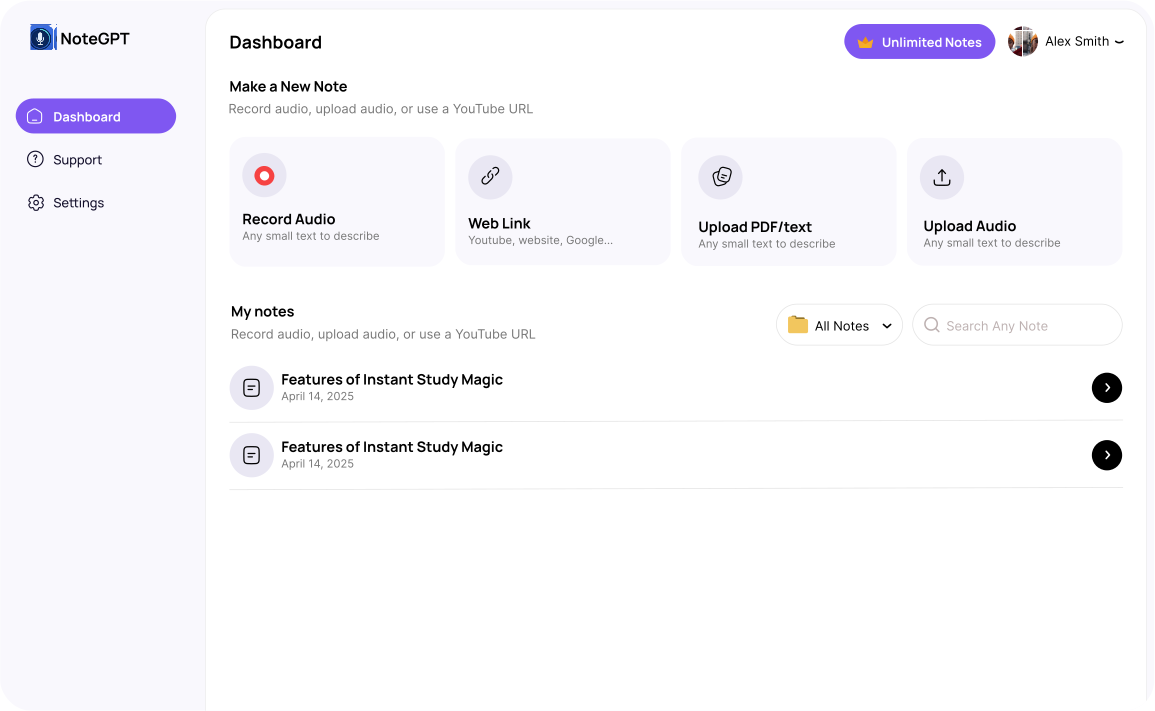
Start with lecture audio, YouTube links, or PDF notes. Upload them to NoteGPT.
Step 2: Generate a Summary
Use the AI to condense the material into a bullet-point summary or a structured outline.
Step 3: Tag and Organize
Let NoteGPT automatically tag important terms, dates, and categories for fast navigation.
Step 4: Generate Flashcards
Ask the tool to create flashcards or questions based on the key points in your summary.
Step 5: Schedule Reviews
Set spaced repetition reminders or sync with a calendar app to keep your memory fresh.
Step 6: Track Progress
Review your quiz results or summary feedback to see which topics need more attention.
Tools That Pair Well With NoteGPT.com
Here are a few additional tools that complement NoteGPT for building a complete study workflow:
| Tool | Use | Cost |
|---|---|---|
| Anki | Spaced repetition | Free |
| Notion | Visual note organization | Free / Paid |
| Otter.ai | Voice transcription | Free / Paid |
| Grammarly | Writing feedback | Free / $12/month |
| ChatGPT | Extra explanations or practice questions | Free / $20/month |
NoteGPT plays well with these tools, letting you export or embed summaries, generate follow-up questions, and keep all your study materials in one place.
Final Thoughts: It’s Not About Studying More, It’s About Studying Right
Studying effectively is no longer just about discipline or willpower. It’s about using the right techniques with the right tools. With AI-powered platforms like NoteGPT, learners can save hours each week, reduce stress, and improve retention—all by working smarter.
Instead of spending all day re-reading or highlighting, you’re now learning in a way your brain actually prefers: short, spaced, active, and focused.
If you’re serious about learning better and saving time, integrating AI into your study workflow isn’t optional—it’s the new standard.